The landscape of personal finance is shifting beneath our feet. Today, news broke that OpenAI has officially launched ChatGPT for Personal Finance in the US; a ground-breaking feature that allows users to securely connect their bank accounts directly to AI. This marks a massive leap from ChatGPT being a simple chatbot to it becoming a fully-fledged “agentic” financial assistant.

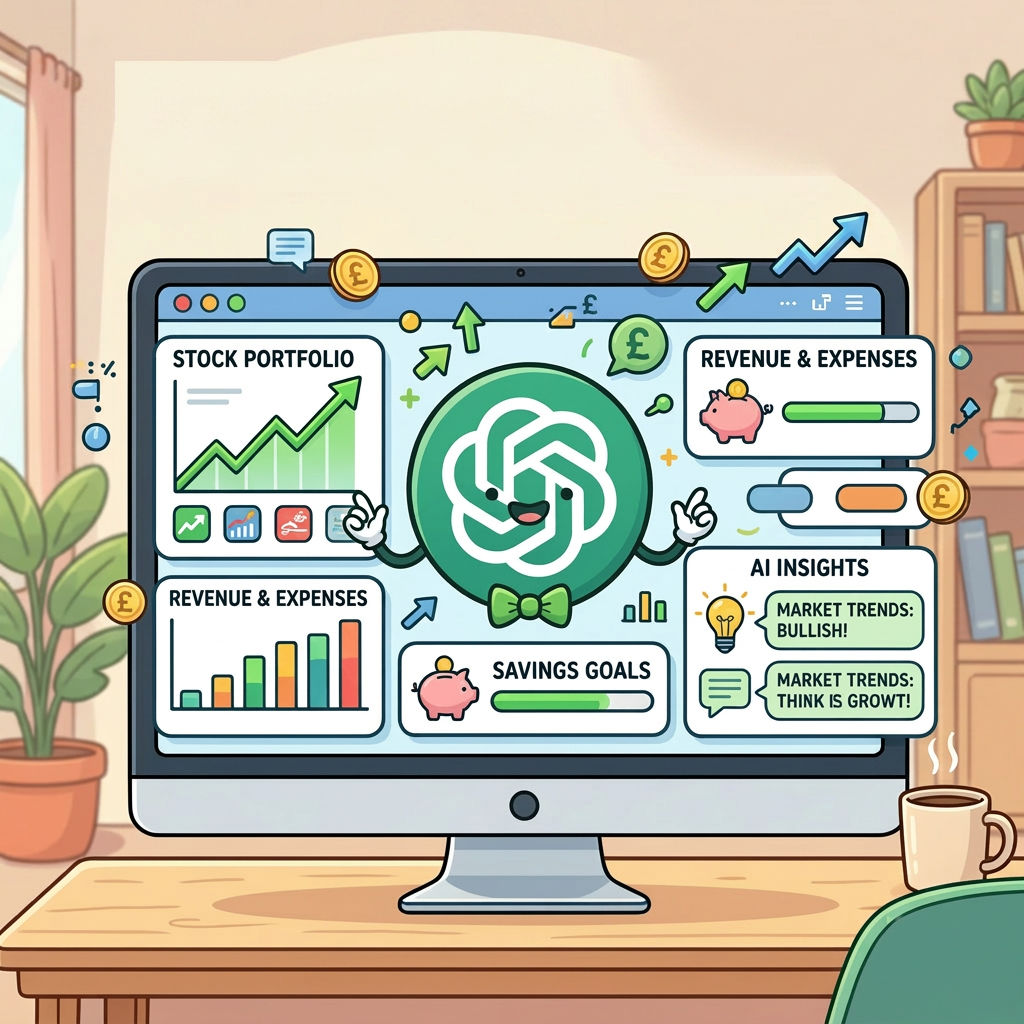
For years, users have been manually uploading CSV files or copying and pasting transaction data to get budgeting advice. Now, with direct integration, ChatGPT can analyse real-time spending, offer investment insights, and even help navigate complex financial milestones like buying a home.
How It Works
The new feature utilises “Open Banking” APIs—the same secure technology used by apps like Moneyhub or Snoop. By connecting your accounts, ChatGPT gains a holistic view of your financial health. It doesn’t just see a list of numbers; it understands the context. For instance, it can recognise a sudden spike in utility bills or suggest a better savings strategy based on your actual residual income at the end of the month.
The Pros: Why This is a Game Changer
-
Hyper-Personalised Financial Advice:
Unlike a static budgeting app, ChatGPT can engage in a dialogue. You can ask, “Can I actually afford that trip to Tenerife next month given my current spending on food?” or “Analyse my subscriptions and tell me which ones I haven’t used in 90 days.” The advice is grounded in your real numbers, not general rules of thumb.
-
Bridging the Gap to Homeownership:
As seen with recent partnerships (such as the NatWest integration), ChatGPT can now pull from live banking data and lender APIs to calculate exactly how much you can borrow, test affordability scenarios, and even signpost you to specific mortgage products. This removes the “black box” feel of traditional banking.
-
Frictionless Execution:
The “agentic” nature of this update means ChatGPT can eventually perform actions for you. Instead of just telling you that you’re overpaying for broadband, future iterations may be able to negotiate a lower rate or move money into a high-yield ISA automatically.
The Cons: The Risks of handing over your piggy bank to AI
-
Data Privacy and Security Concerns:
The most obvious hurdle is trust. Connecting your bank account to an LLM (Large Language Model) feels inherently risky to many. While OpenAI uses enterprise-grade encryption, the idea of financial data being used to “train” models remains a point of contention for privacy advocates.
-
The Accuracy of “Financial Logic”:
AI can still “hallucinate”. While it is excellent at pattern recognition, it may misinterpret a specific transaction or provide flawed investment advice. Unlike a human financial advisor, ChatGPT doesn’t have a fiduciary duty, the regulation of the FCA or an ombudsman — meaning if its “advice” leads to a poor financial decision, the user bears all the risk.
-
The End of “Tech Exceptionalism”:
As AI moves into sensitive areas like health and finance, the legal landscape is tightening. Recent lawsuits regarding “harmful guidance” suggest that if ChatGPT gives bad financial advice that leads to a missed mortgage payment, the legal repercussions for both the company and the user are still in a “grey zone”.
The Verdict
The launch of ChatGPT for Personal Finance is a “Netscape moment” for banking. It turns a passive account into an active, intelligent resource. However, users should approach with cautious optimism. While the convenience of a 24/7 financial genius in your pocket is undeniable, the responsibility of double-checking the AI’s maths remains firmly with the human behind the screen.